A Simple Trainer That Meant More Than I Expected
The Aero L-29 Delfin was never meant to be a glamorous aircraft. It was a trainer – steady, reliable, and honest in its purpose. During the Cold War, it quietly carried generations of pilots into the jet age.
Many Hungarian pilots who later flew MiG-21s and MiG-23s first sat in the cockpit of the L-29. It was not the star of the air force, but it was where every story began.
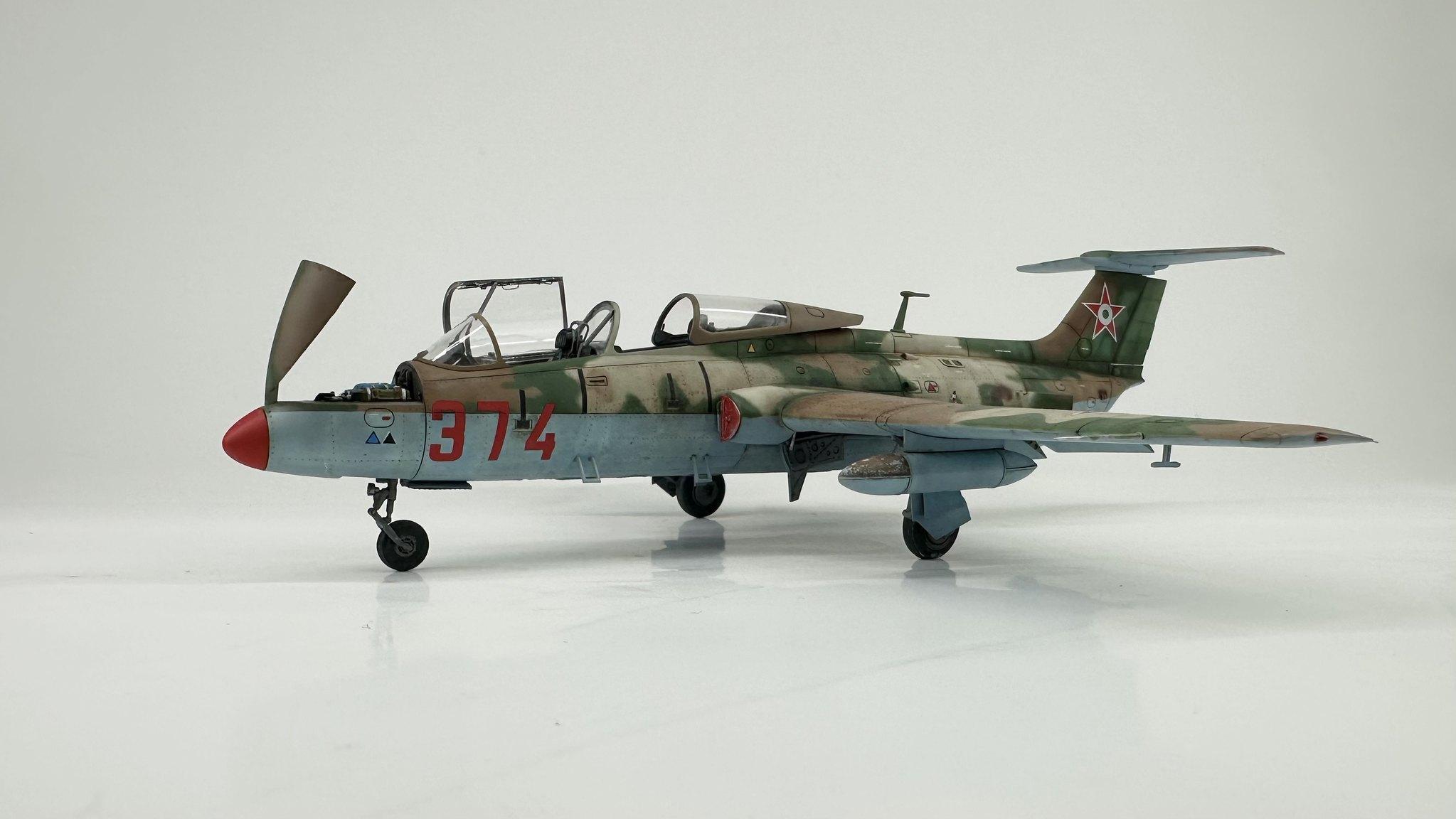
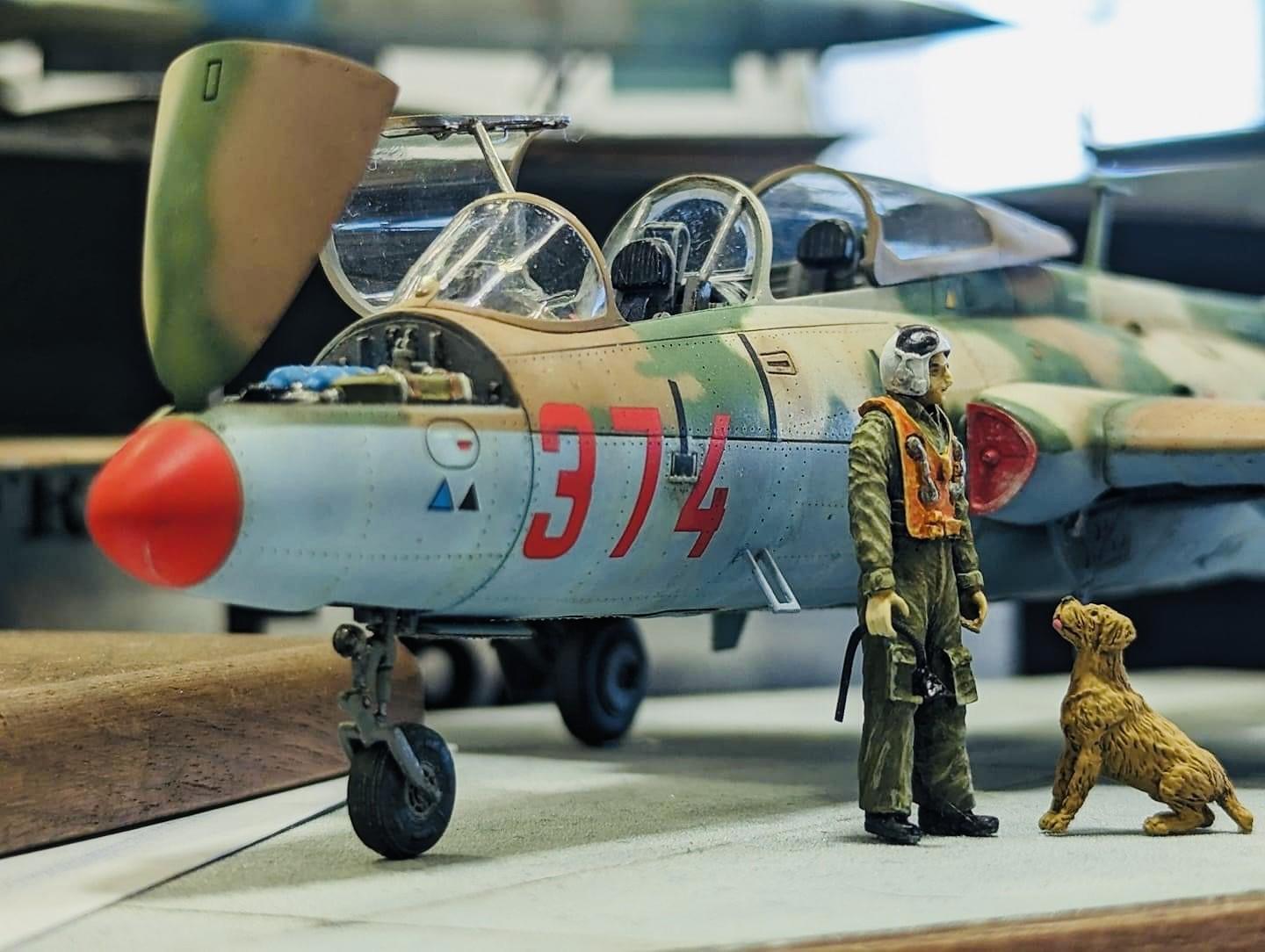
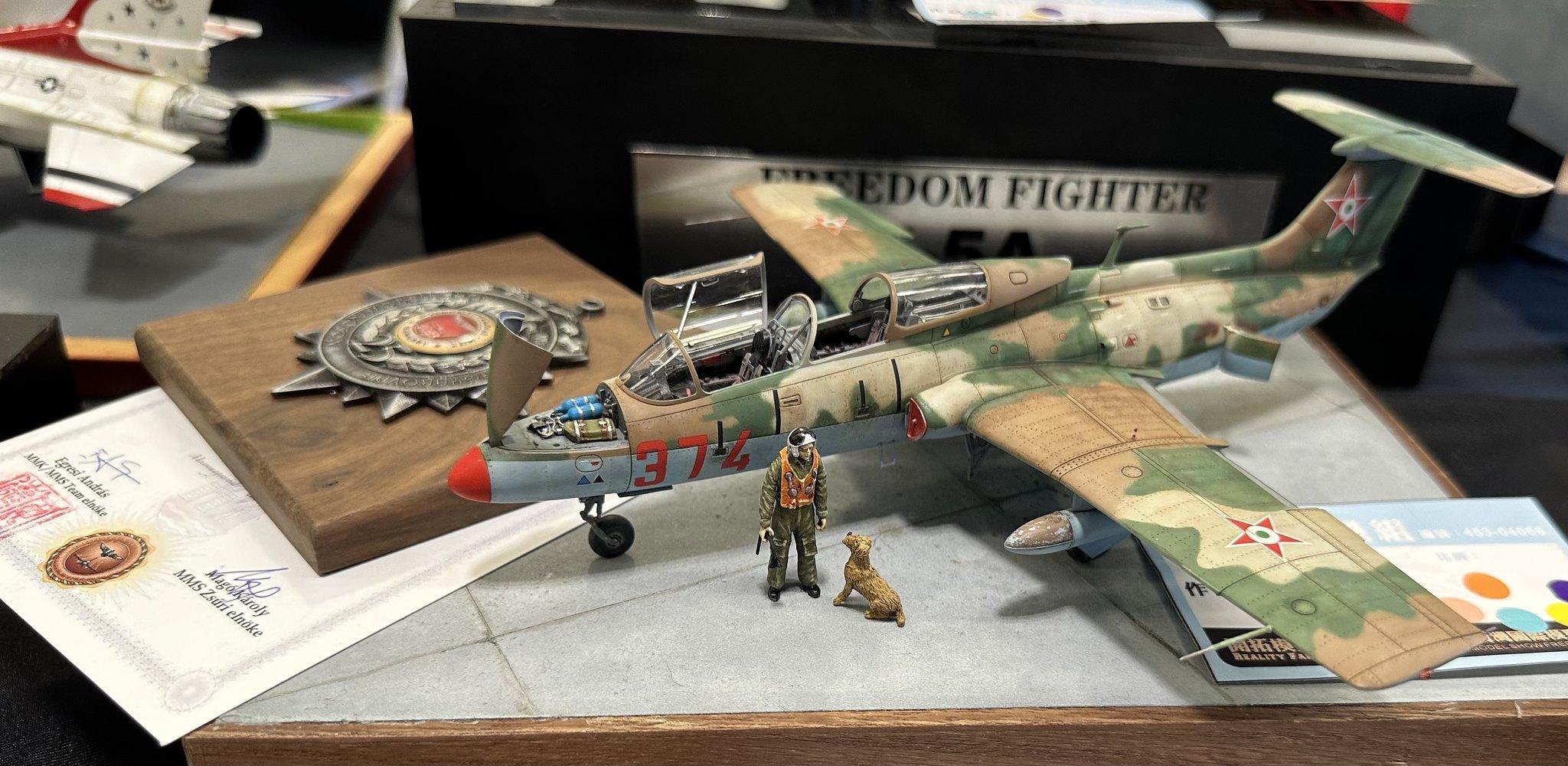
For this project, I built the AMK 1/48 L-29 Delfin, finished as aircraft “Red 374” in the 1973 Hungarian four-color camouflage.
At first, I was simply drawn to the colors – quiet, balanced, and full of character. But as the build progressed, this modest trainer slowly became something more meaningful to me.
Learning to See Harmony
The Hungarian four-color scheme from 1973 uses green, brown, sand, and light blue. None of the colors are loud or dramatic, yet together they create a calm and balanced appearance. This camouflage does not try to impress at first glance. Instead, it invites you to look a little longer.
During the build I did not have a clear theory in mind. I simply adjusted things step by step:
- lowering the saturation of the colors
- softening the edges carefully
- balancing the red nose and numbers
Sometimes I pushed too far and had to step back. Sometimes I just sat and looked at the model for a while.
Somewhere along the way I realized something simple: harmony is harder than contrast. Anyone can make colors stand out. Making them live together peacefully takes patience.
That quiet balance between camouflage and identification is what makes this Hungarian scheme so beautiful to me.
Rivets – Giving the Surface a Voice
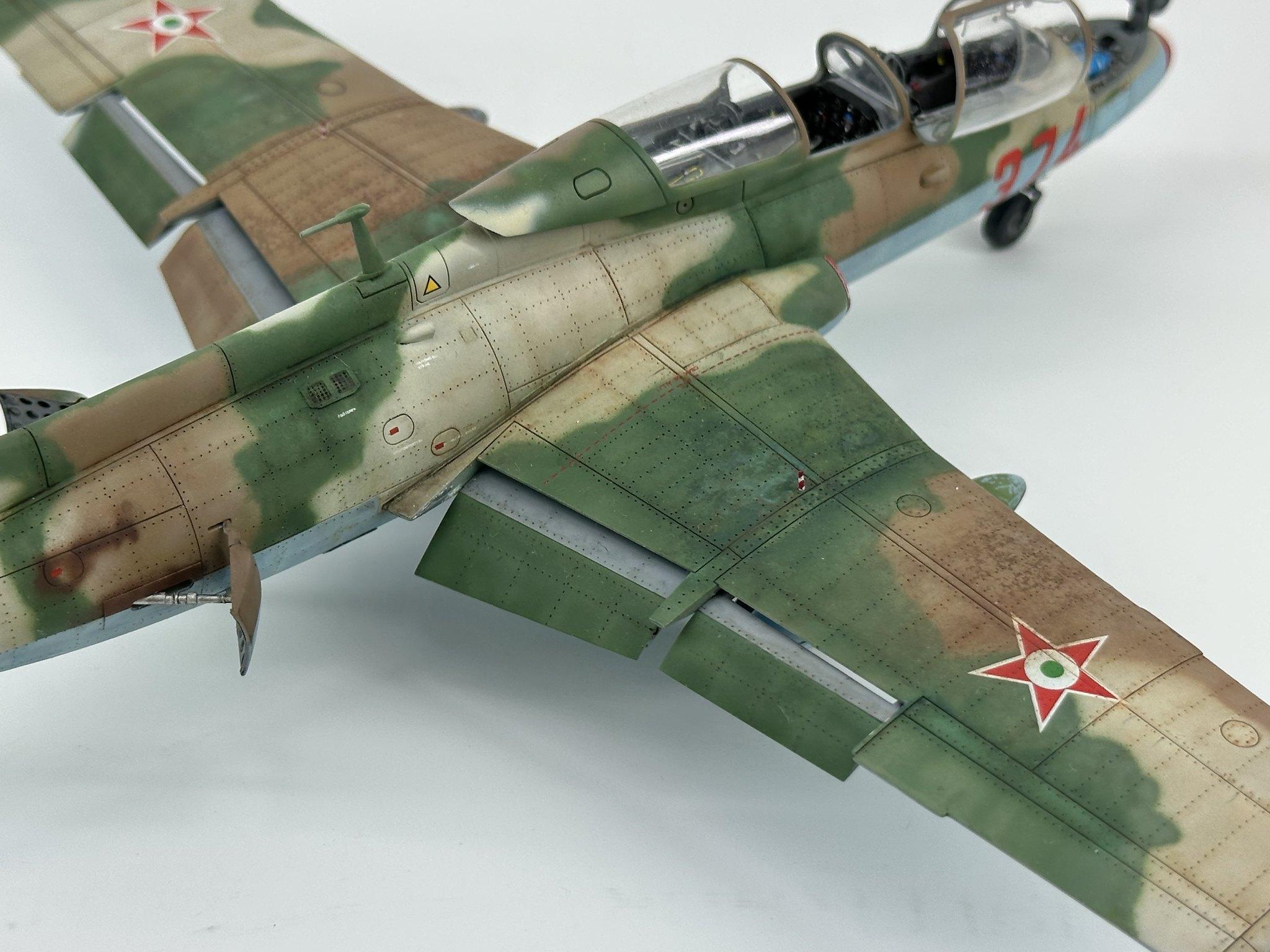
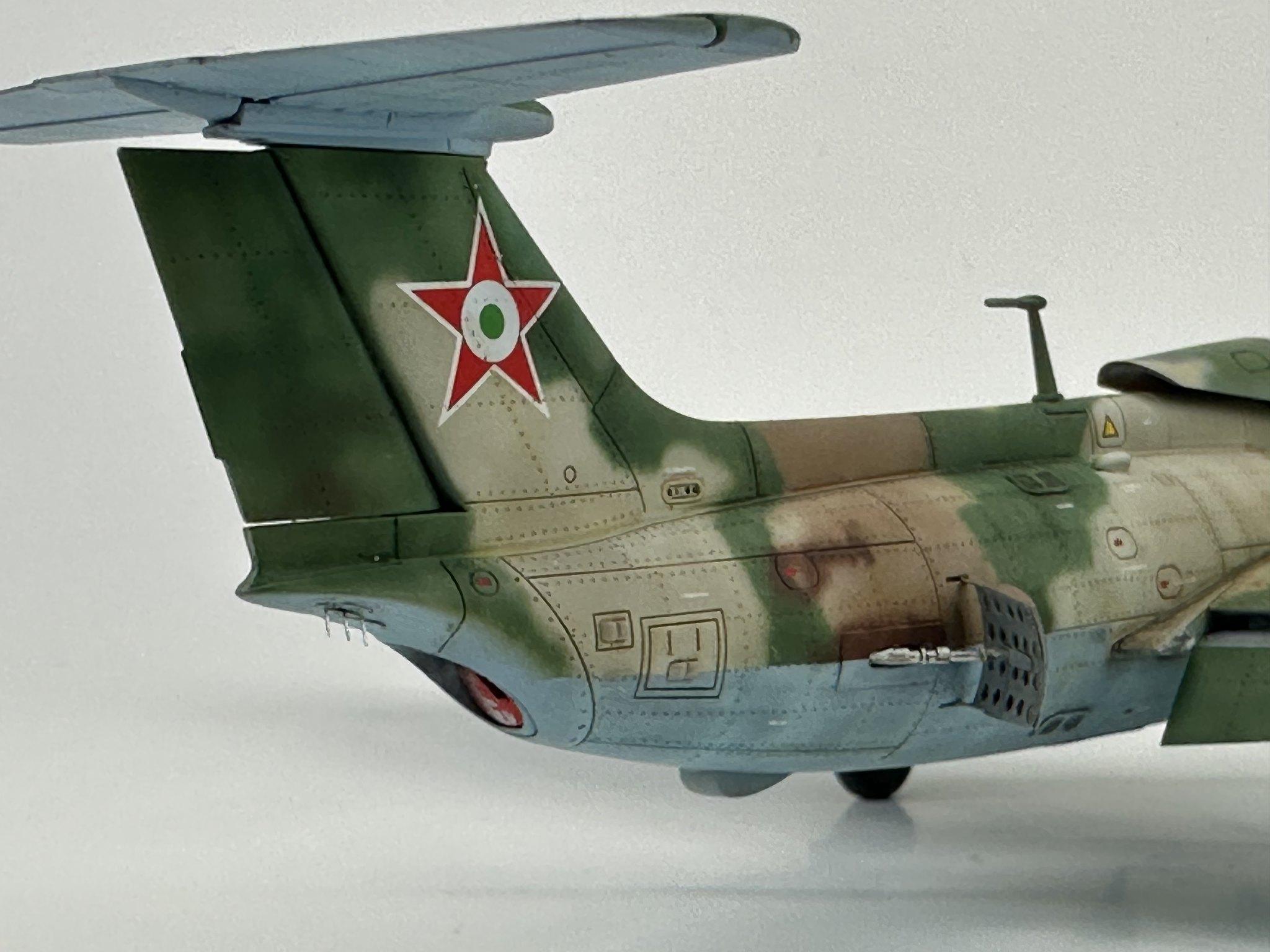
The kit surface was very smooth, almost too clean. I felt it needed more structure. I first used a rivet wheel to mark the spacing, then carefully went back with a needle to deepen and round each rivet. The wheel alone tends to create something closer to a dashed groove rather than true circular rivets. Working through them one by one was slow, but also very calming.
After painting and weathering, I noticed something I had not fully understood before: light and shadow can change how we see color.
The rivets were not added simply to show detail. They were added to support the camouflage – to give the surface something real to rest on. Structure gives color its foundation.
A Quiet Turning Point
When I finished Red 374, I did not feel like I had completed something. Instead, I felt a question. If four colors already require this much balance… what would happen with more?
That question eventually led me to build the six-color Mikoyan-Gurevich MiG-23. Looking back now, this L-29 was not the final destination. It was the beginning of a deeper exploration.
For the first time, I truly understood that the beauty of camouflage is not about complexity – it is about harmony. And harmony takes time.
With Gratitude
During my research on the 1973 Hungarian camouflage, I am deeply grateful to
István (Esb Reg) for kindly sharing color references and background information. His help allowed me to better understand the original tones used on these aircraft.
I would also like to thank Zoli (Mekett) for his invitation and encouragement. Through this exchange, I felt connected not only to the aircraft itself, but also to the people who care about its history.
This Red 374 is more than plastic and paint. It carries a small piece of shared passion – across countries, across languages, and across time.